
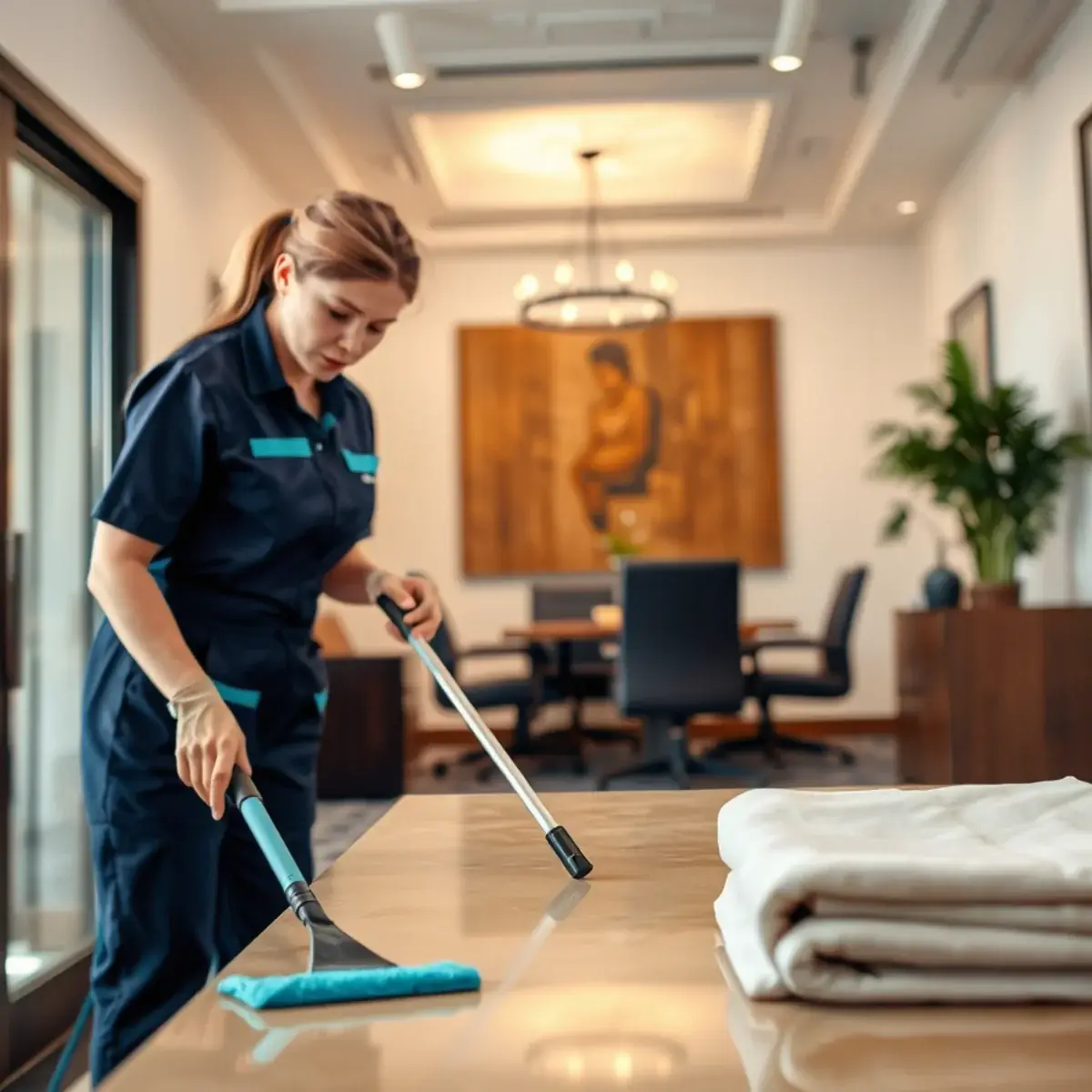
A clear, detailed approach to office cleaning
A clean workplace supports the people who use it and the clients who visit it. Reception areas, shared surfaces, restrooms, break rooms, and floors all contribute to the impression a business makes before a conversation begins.
Office cleaning starts with a site-specific scope. A small professional office, a multi-room workplace, and a high-use facility do not need the same schedule. Entry instructions, alarm procedures, sensitive areas, and preferred service times should be documented before work begins.
One supplied client review comes from a Burlington County surgery center owner who described three years of weekly office cleaning and emphasized the importance of cleanliness in that environment. That review demonstrates experience, but every workplace still needs its own discussion of requirements and boundaries.
Routine communication keeps the plan useful. Staffing changes, special meetings, construction dust, or seasonal traffic can alter what needs attention. Sharing those changes before a visit helps keep the agreed work focused and dependable.
Build the office scope by zone and frequency
A useful walkthrough separates daily-use pressure points from lower-frequency details. Reception, entry floors, restrooms, break rooms, trash, and shared touchpoints may need the tightest cadence; private offices, conference rooms, ledges, and less-used spaces can follow the frequency agreed for the facility. Document which doors, suites, storage areas, and staff-only rooms are in scope so access and expectations match.
Security and workplace boundaries matter as much as the checklist. The business should define alarm, key, badge, parking, lockup, and incident-contact procedures; protect confidential papers and valuables; and specify whether desks, screens, phones, or specialized equipment may be touched. Restroom consumable restocking requires the client-supplied products and placement to be agreed. Carpet extraction, floor refinishing, exterior work, hazardous-material response, and regulated medical or laboratory protocols are not implied by routine office cleaning.
- Record the rooms, approximate square footage, occupancy, floor types, restroom count, break areas, and desired cadence.
- Identify secure, confidential, clinical, technical, or equipment areas that are excluded or require special instructions.
- Confirm trash destinations, recycling rules, liners, restroom supplies, and who provides consumables.
- Set the authorized service window, alarm procedure, entry contact, lockup steps, and process for reporting an issue.
What this cleaning can include
- Office and reception dusting
- Shared-area surface cleaning
- Restroom and break-room care
- Vacuuming and mopping
- Trash removal
- Agreed high-touch priorities
Final scope depends on the home and the estimate. If an item is especially important—such as an appliance interior, a particular bathroom detail, or a room with limited access—name it before the appointment so the plan is clear.